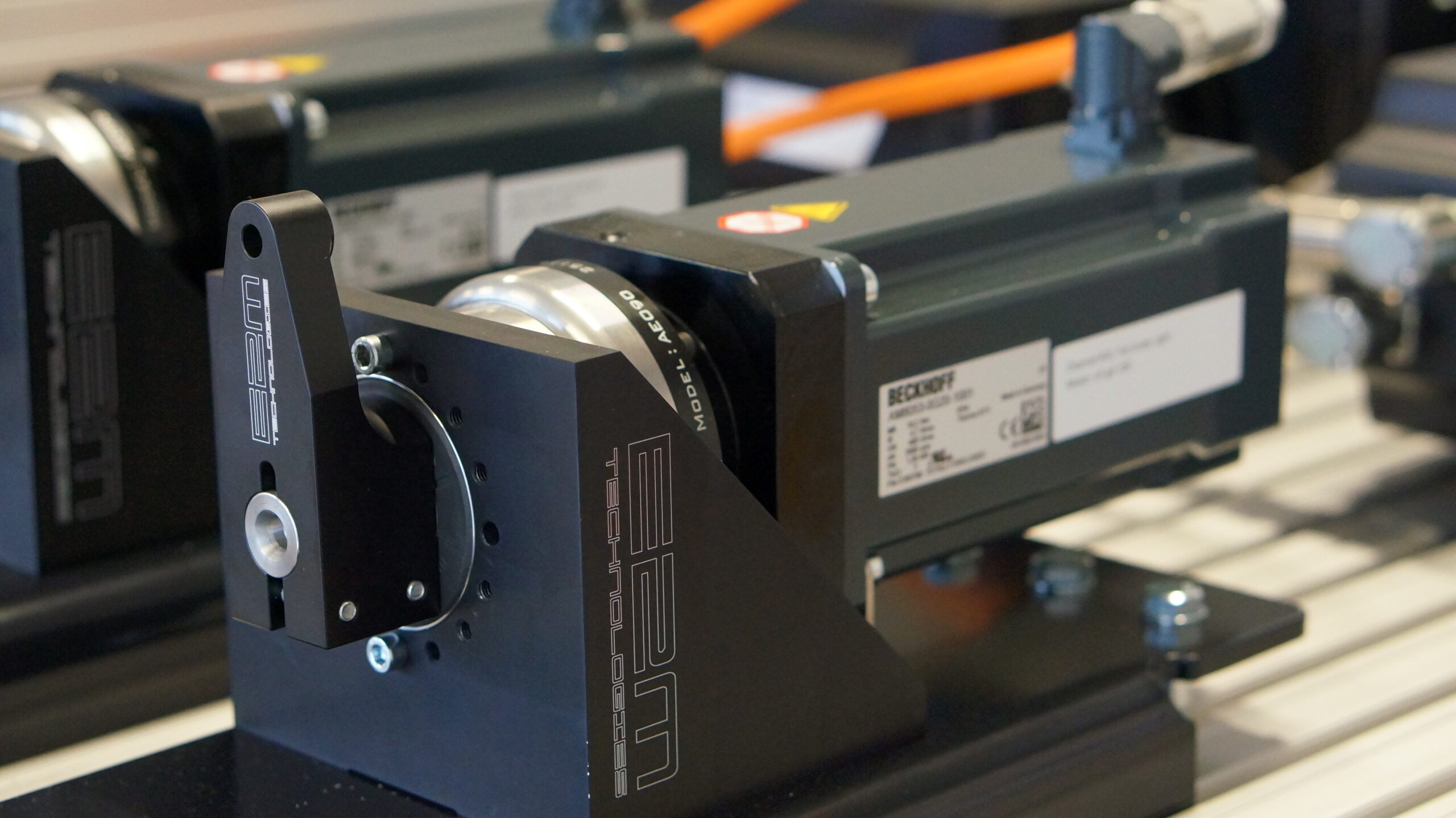
In high-end flight simulation, the “feeling” of the controls is often the most complex element to replicate. True fidelity requires a perfect dialogue between the physics engine and the mechanical actuators. At entrol, we have taken a definitive step forward by integrating our proprietary flight models with E2M technologies‘ Class D-grade Control Loading System (CLS).
This integration is much more than a hardware upgrade. As Claudia Calleja, Business Development Manager at entrol, explains: “By perfecting our CLS now, we have already solved one of the most difficult parts of the puzzle: the physical connection between the pilot and the simulator.”
The brain and the muscle:
a strategic synergy
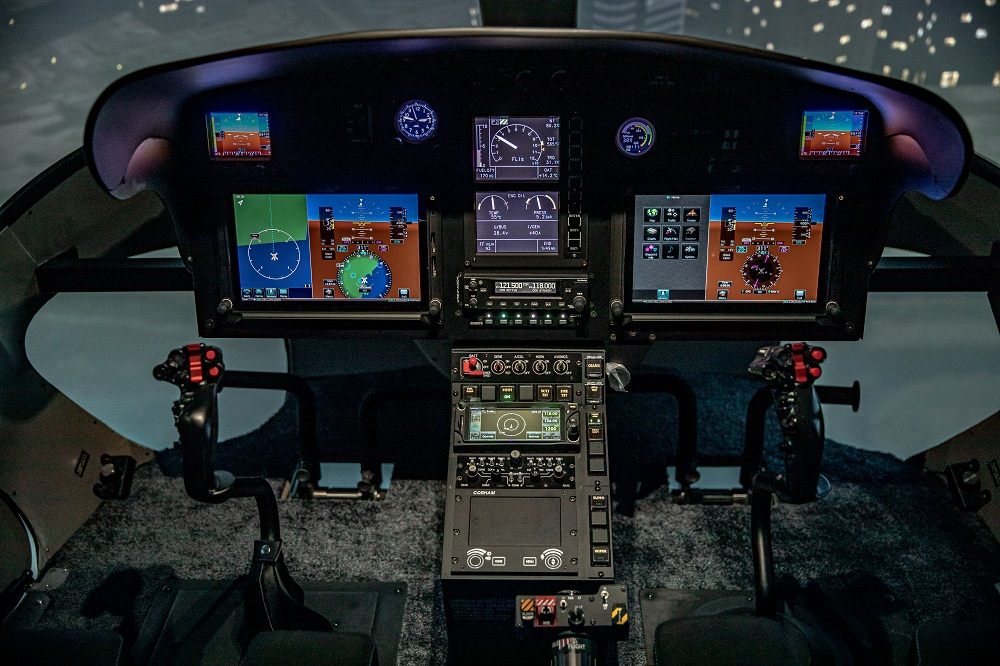
A common misconception is that the hardware dictates the forces. At entrol, we maintain total sovereignty over the simulation’s “intelligence.” Our software is the brain; the hardware is the muscle.
Sandra Hernández, Senior Expert Engineer at entrol, clarifies this synergy: “The flight, control, and force calculation models have always resided in our own software. The major leap with E2M is how it allows us to exploit the advantages of our models without limitations. It offers a vast range of possibilities to replicate our calculations with much higher realism and a significantly better ‘feeling’.”
The “Loop”: continuous,
bi-directional communication
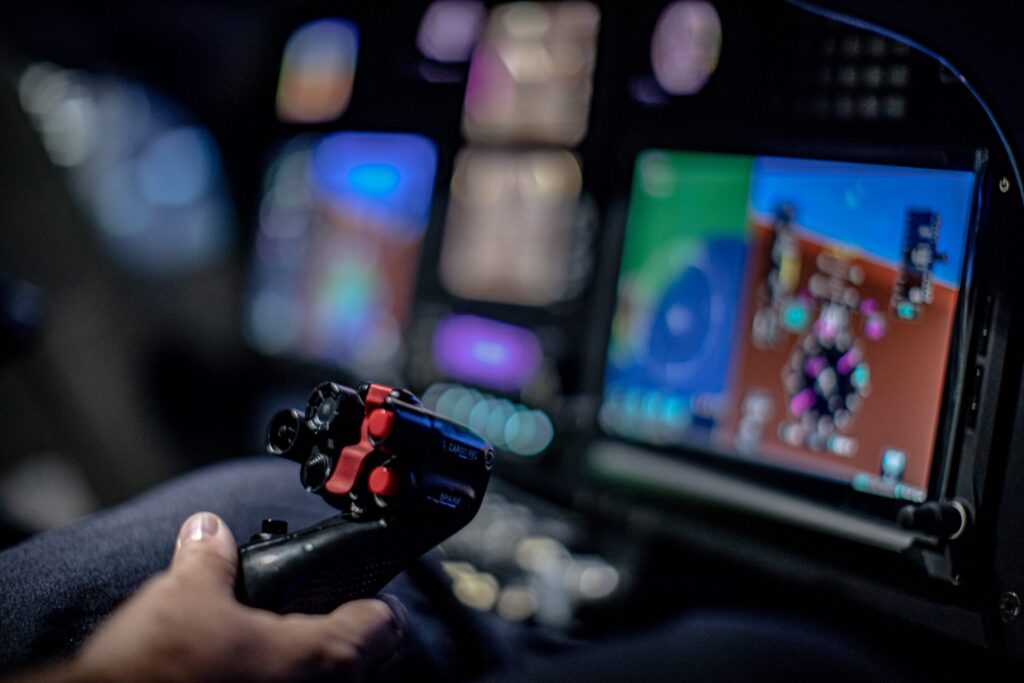
The core of this new CLS is the high Sampling Rate and the bi-directional communication between entrol´s software and the E2M controller. In training, a split-second delay between “feeling” a change in the controls and seeing the horizon move causes motion sickness and negative training.
By optimizing the data link between the controls and the visuals, we have ensured an almost instantaneous response. This high-frequency “loop” ensures that our flight model—designed to replicate real aircraft data—communicates with the hardware without any perceived lag.
“The key is to identify every variable that affects the flight controls—mechanic or aerodynamic forces, autopilot, etc.—and translate this into an input that the hardware can execute immediately,” says Claudia Calleja. This precision allows pilots to perceive nuances that are critical for mission-ready training:
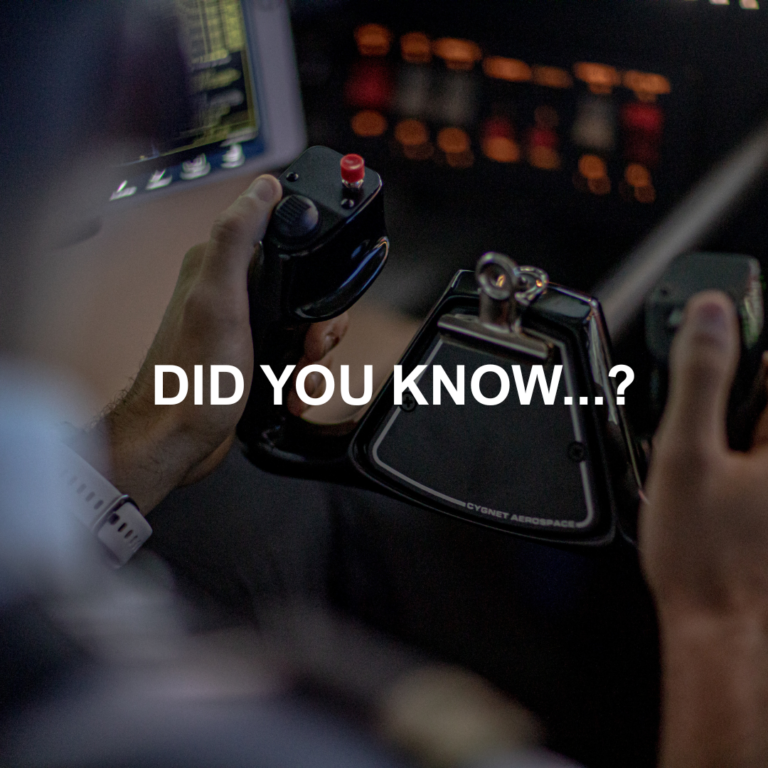
- Subtle pressures: As the pilot accelerates, the controls naturally get “stiffer,” mimicking the air pressure on the blades.
- Dynamic feedback: Instead of a fixed tension, the pilot experiences evolving trim, centering forces, and friction levels that change in real-time based on flight conditions.
- Authentic vibrations: The pilot will feel specific tactile signals when entering a hover or passing through Effective Translational Lift (ETL). These aren’t just shakes; they are precise cues telling the pilot exactly how the aircraft is performing.
Advanced aerodynamics and custom variables
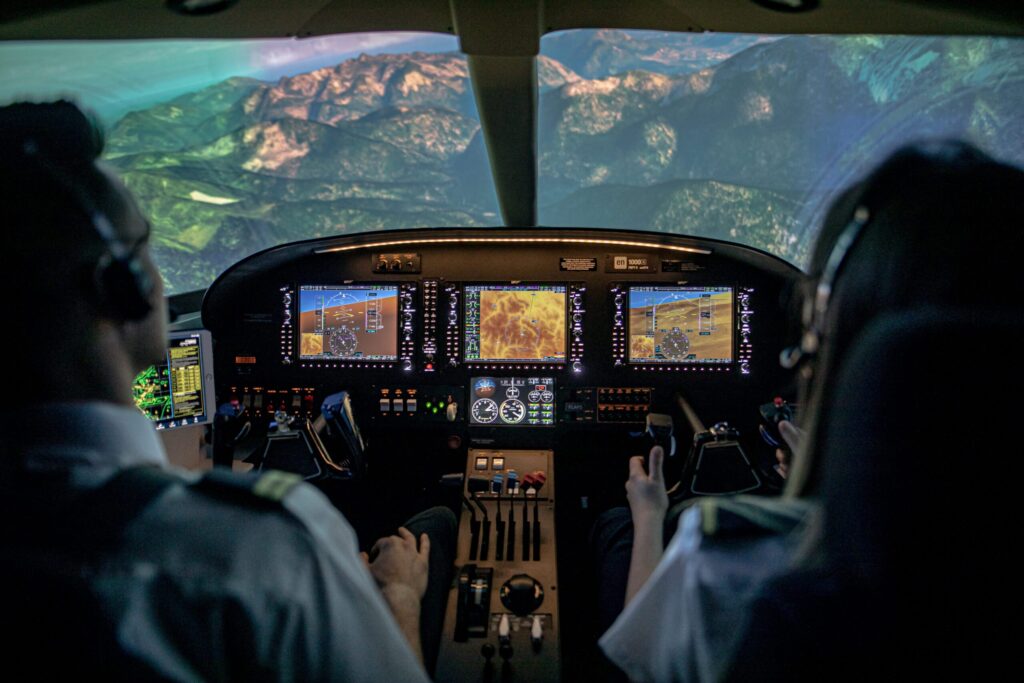
Unlike standard systems, we do not send raw data like airspeed (IAS) to the CLS for external interpretation. entrol’s software performs all the heavy lifting internally.
“Our software is aware of every independent variable in the control model at all times,” says Sandra Hernández. “It tracks the control surface position and aerodynamic thrust, translating these into specific parameters—friction, stiffness, or damping—that the E2M hardware then replicates with great precision.”
Operational value: building reliable reflexes
This technical precision translates directly into safer training. When the hardware no longer limits the software, the pilot builds authentic muscle memory.
“By the time a pilot gets into the real cockpit, their hands and feet already know the exact weight and timing required for a maneuver,” highlights Claudia. “They are no longer ‘learning a simulator’; they are building the reflexes they will need to stay safe.”
Roadmap 2026: the foundation of the Full Flight Simulator (FFS)
The decision to partner with E2M is a cornerstone of our Roadmap 2026. Their hardware is designed specifically to replicate aircraft-grade parameters—such as cable stiffness, autopilot forces, and centering slopes.
“By perfecting our CLS now, we have already established the physical connection between the pilot and the simulator,” Claudia explains. “It gives us a proven realism that makes our step into the highest level of global simulation a natural and confident one.”
When an operator invests in entrol today, they are not just buying a simulator; they are acquiring a technology that is already prepared for the highest levels of global certification.