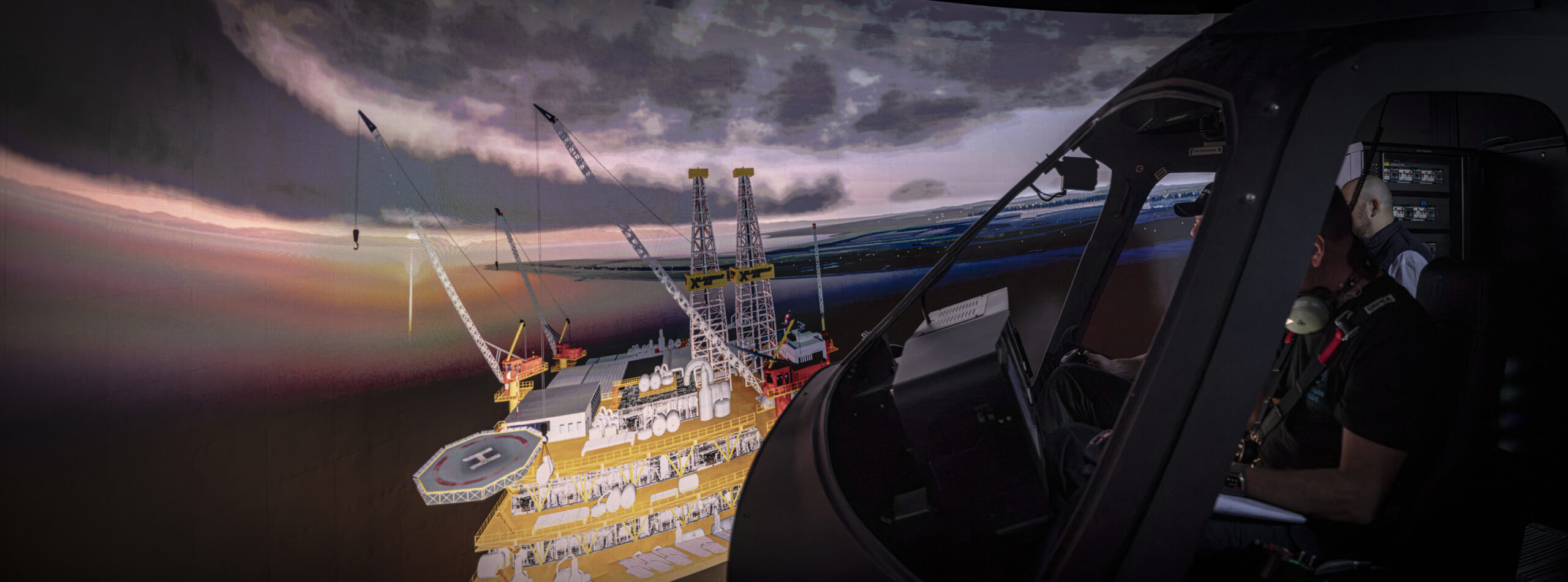
Flight simulation plays an increasingly important role in helicopter training, providing pilots with a controlled environment to practise aircraft procedures, systems and operational scenarios.
Among the different Flight Training Device (FTD) qualification levels, FAA FTD Level 7 provides a high level of fidelity. But what does this qualification mean, and what can it offer helicopter operators?
What is an FTD Level 7 flight simulator?
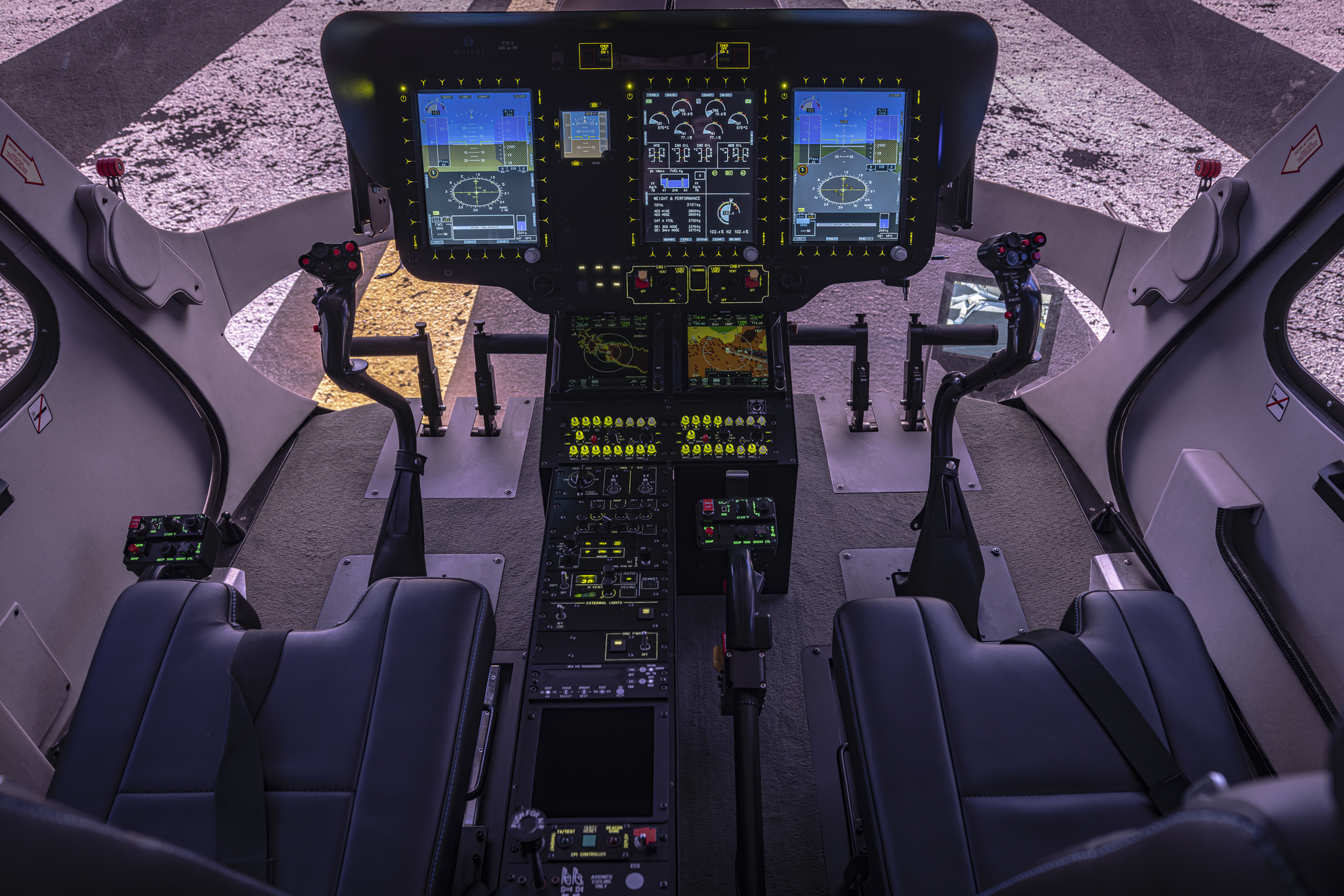
A Flight Training Device is a training device that reproduces the instruments, equipment, panels and controls of an aircraft, together with the systems and computer programmes necessary to represent its operation.
Within the FAA qualification framework, FTD Level 7 is specifically designed for helicopters.
The Level 7 requirements go beyond simply reproducing the appearance of a helicopter. The device must represent the relevant aircraft characteristics and systems, while providing the physical and visual interfaces needed for training.
A simulator built around a specific helicopter
One of the key characteristics of an FAA FTD Level 7 is that it is built around a specific helicopter.
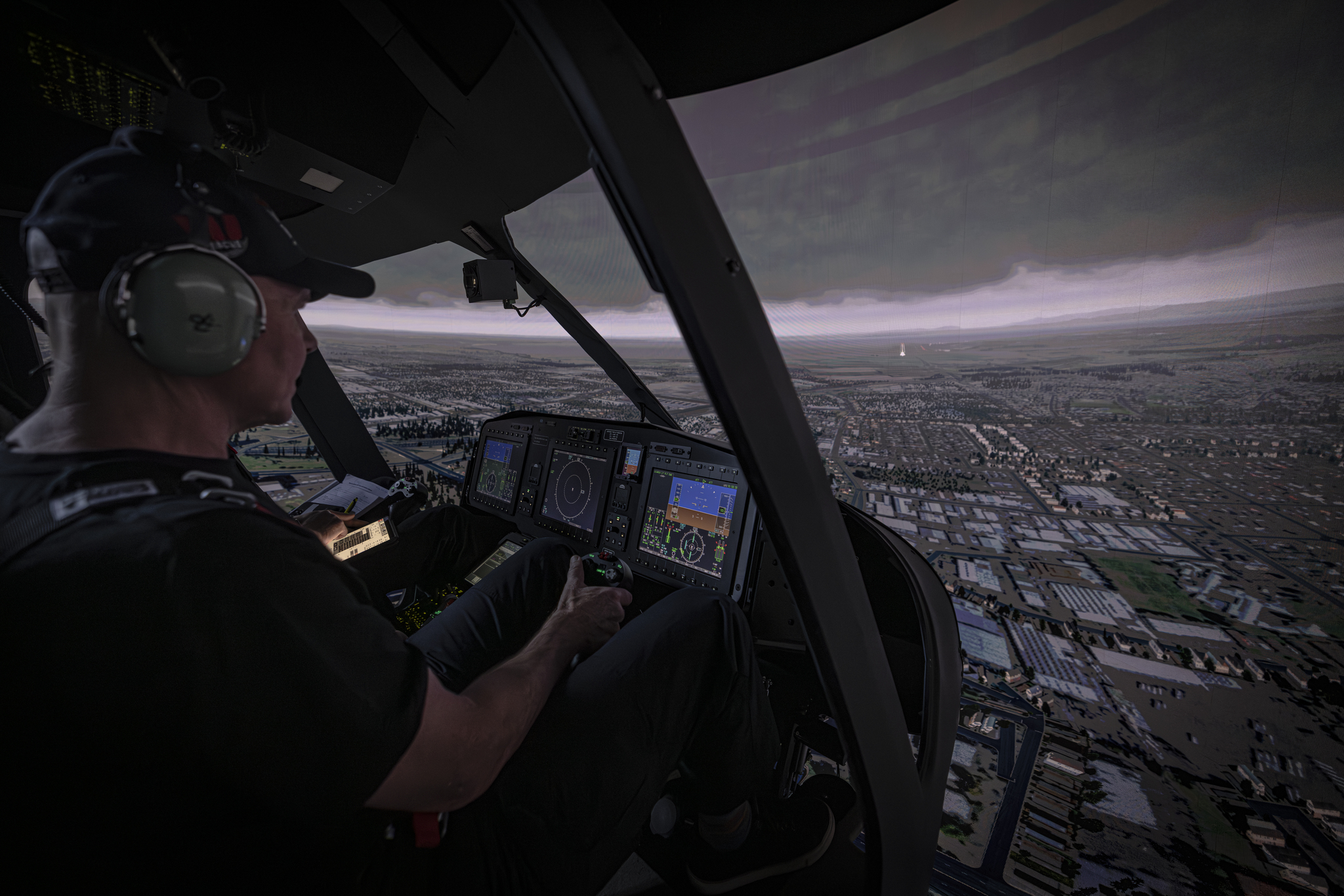
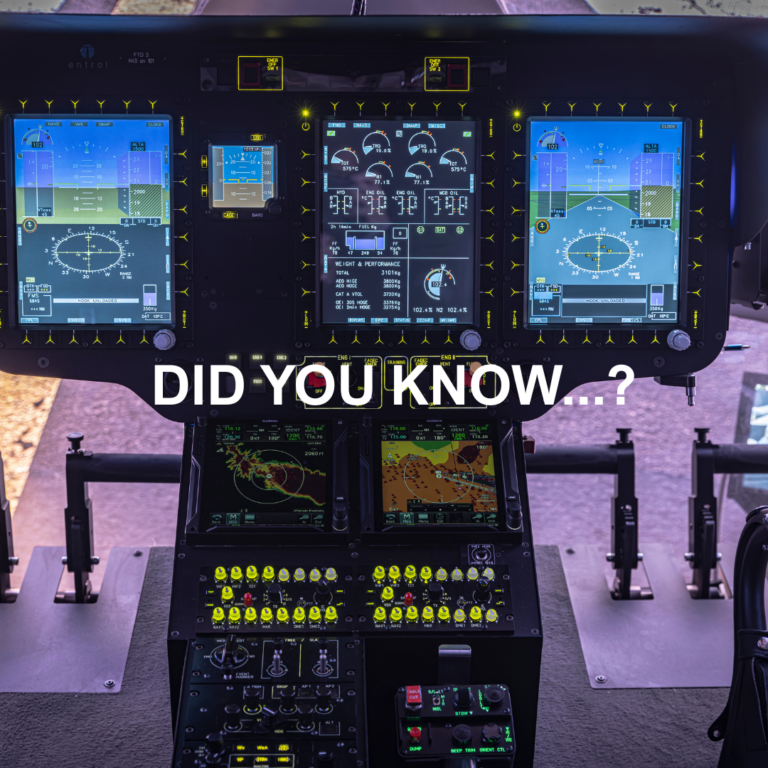
The FAA requires an enclosed, helicopter-specific cockpit, aerodynamic programming with applicable helicopter systems operating, representative control loading throughout the ground and flight envelope, and controls, switches and knobs that physically replicate the aircraft in their operation.
Visual, sound and vibration systems
The Level 7 qualification also includes requirements covering the sensory aspects of the simulated flight environment.
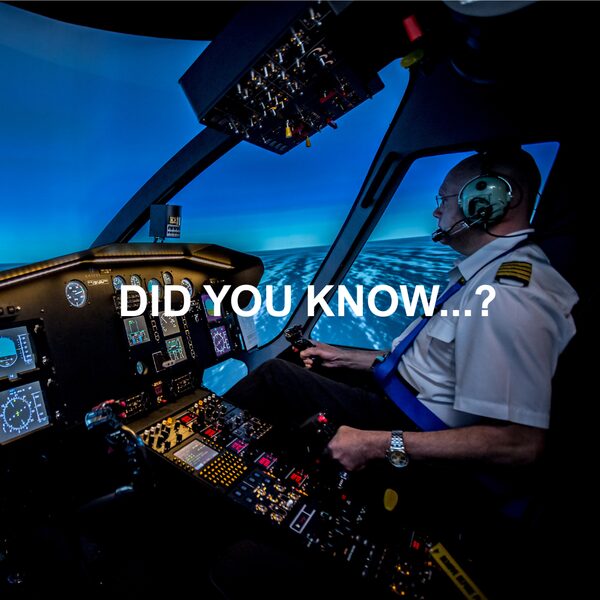
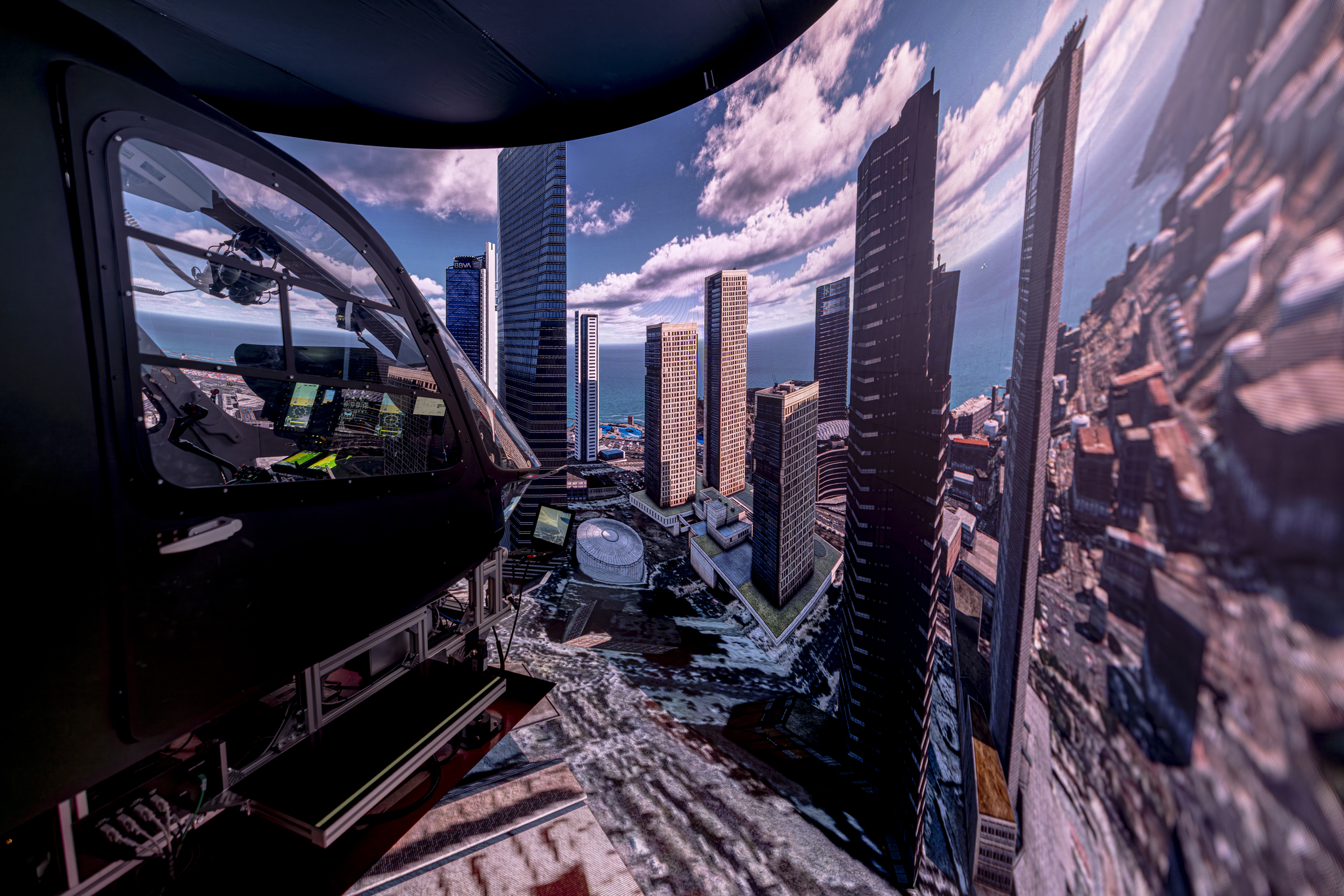
The FAA specifies a visual system with a wide field of view, together with sound representation and vibration cueing to reproduce characteristic helicopter vibrations.
Together, these systems contribute to a high-fidelity training environment, providing pilots with visual and sensory cues representative of helicopter operations.
Why is FTD Level 7 relevant for helicopter operators?
Helicopter operators can have very different training requirements depending on the aircraft they operate and the missions they perform.
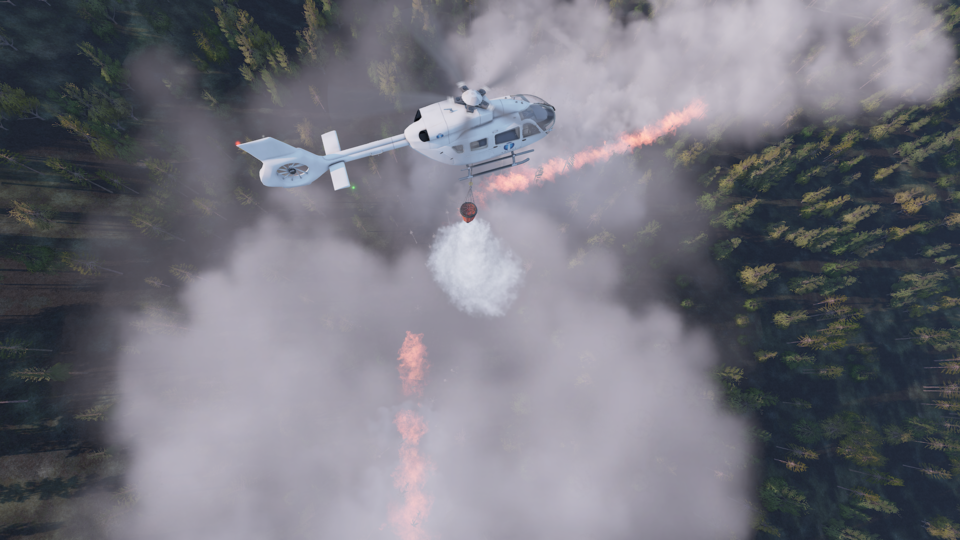
Firefighting, heavy-lift operations, search and rescue and other specialised activities can require pilots to maintain proficiency in aircraft-specific procedures and demanding operational situations.
An FTD Level 7 provides an environment in which these tasks can be practised without relying exclusively on the operational helicopter.
Training in a controlled environment
Simulation allows instructors to repeat and configure training scenarios according to the objectives of each session.
Pilots can practise procedures and systems repeatedly, while instructors can introduce specific situations and review performance afterwards. This makes simulation particularly useful for training tasks that benefit from repetition and structured practice.
Training for specialised missions
Helicopter operators perform a wide range of missions, each with different operational requirements and training needs. An FTD Level 7 can provide a suitable environment to practise these missions in a controlled way.
By combining specific helicopter representation with mission-oriented training scenarios, pilots can practise the procedures, skills and operational situations associated with their day-to-day activities.
This makes the simulator particularly valuable for operators whose crews need to prepare for demanding or specialised missions, while allowing training to take place in an environment adapted to the operation.
FTD Level 7 for specialised helicopter operations
entrol’s recent Level 7 projects show how this type of simulator can be developed for very different helicopter platforms and missions.
The H145, S-64 and Bell 214ST projects each require specific cockpit configurations, systems and training capabilities, demonstrating the importance of adapting the simulator to the aircraft and its intended use.
From H145 to S-64 and Bell 214ST
entrol’s Level 7 projects include different helicopter platforms, from the H145 to the S-64 and Bell 214ST, each developed according to the characteristics of the aircraft and the training requirements of the operator.
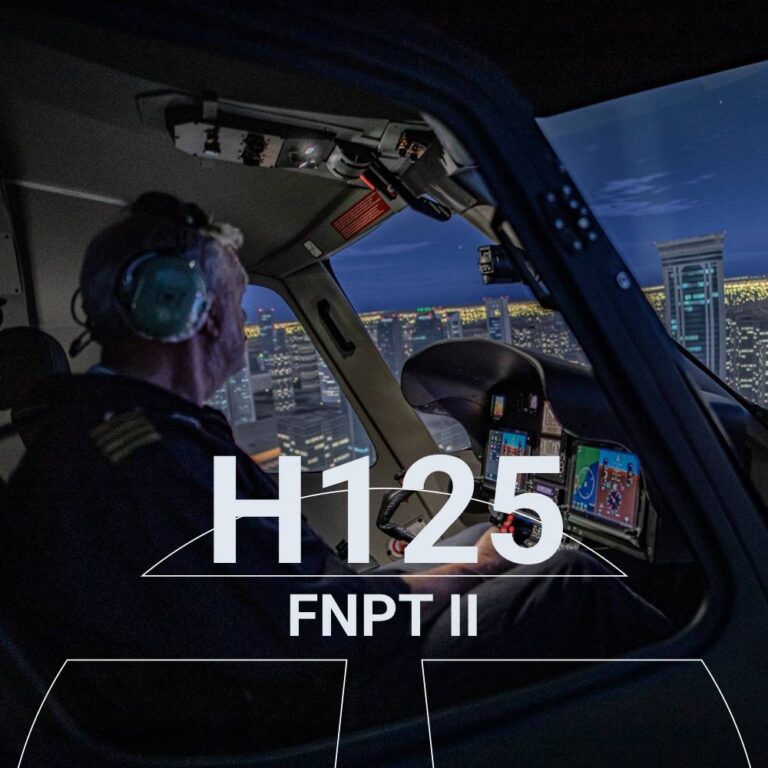
The H145 FTD Level 7 for Transportes Aéreos Pegaso includes a specific H145 cockpit configuration, with Helionix components and Dual GTN 750 Xi systems, as well as a flight model adjusted to the FAA FTD Level 7 requirements.
The S-64 FTD Level 7 for Helicopter Express includes specific systems, additional instruments and predefined mission scenarios for firefighting.
For McDermott Aviation’s Bell 214ST, entrol’s project includes an aircraft-specific simulator with an LED visual system, Unreal Engine image generation, cockpit vibration and mission scenarios for firefighting and cargo operations. The development process also includes an inspection of the real Bell 214ST to take photographs and measurements and define the simulator’s final specifications.
Together, these projects illustrate how FTD Level 7 simulators can be adapted to different helicopter platforms and operational requirements, combining aircraft representation with the training capabilities needed for each operator.
FTD Level 7 vs Full Flight Simulator: what is the difference?
When comparing an FTD Level 7 vs Full Flight Simulator, the main distinction is the way each device provides simulation and motion cues.
An FTD Level 7 is a fixed-base device. It can reproduce the aircraft’s cockpit, systems, aerodynamic characteristics, controls and sensory cues, including vibration, but it does not incorporate the full-motion platform of an FFS.
A Full Flight Simulator, in contrast, incorporates a motion system to reproduce aircraft movement and provide motion cues during training.
Fixed-base does not mean low fidelity
The absence of a motion platform does not mean that an FTD Level 7 provides a basic simulation experience.
The qualification requires a combination of aircraft-specific systems, representative controls, control loading, visual representation, sound and vibration. These elements are designed to provide a high degree of fidelity while maintaining a fixed-base configuration.
The important distinction is therefore the type of capabilities provided by each simulator rather than simply considering one as a more realistic version of the other.
Choosing the right simulator for the training task
The choice between an FTD Level 7 and an FFS should be based on the training objectives and regulatory requirements applicable to the operator.
An FTD Level 7 can be particularly relevant when the training programme requires a high degree of helicopter-specific fidelity but does not require a full-motion platform.
FTD Level 7 solutions for different helicopter operations
At entrol, we develop certified helicopter flight simulators designed around the aircraft and training requirements of each customer, incorporating technologies such as advanced visual systems, control loading, vibration and Unreal Engine-based image generation.
From the H145 to the S-64 and Bell 214ST, our Level 7 projects demonstrate how simulation can combine high-fidelity aircraft representation with mission-specific training environments.