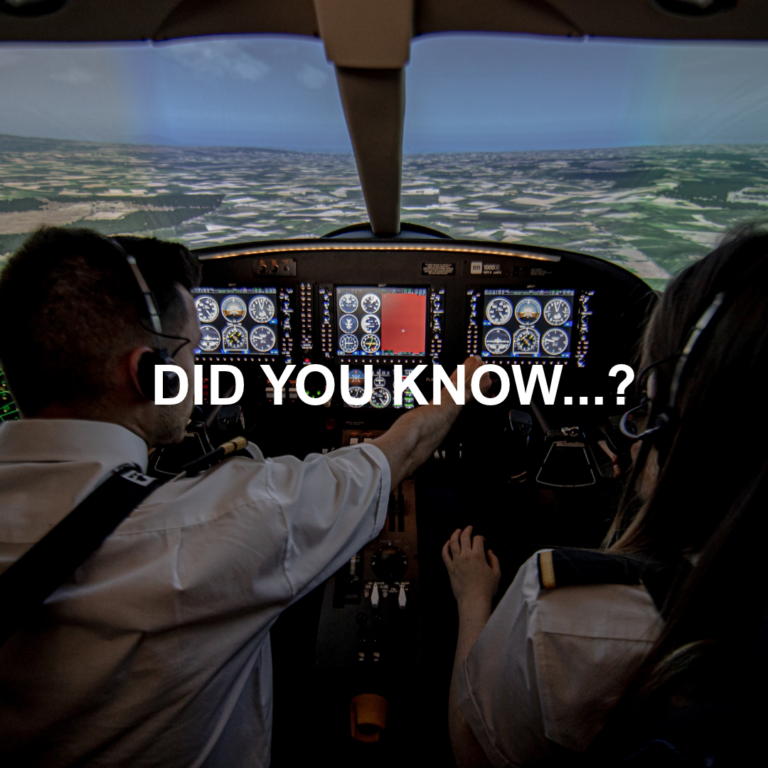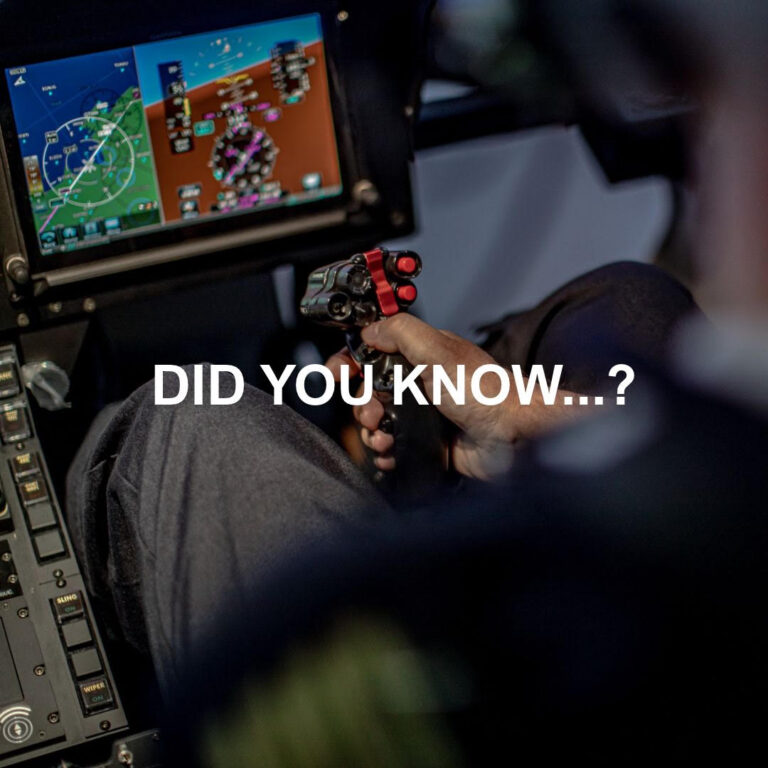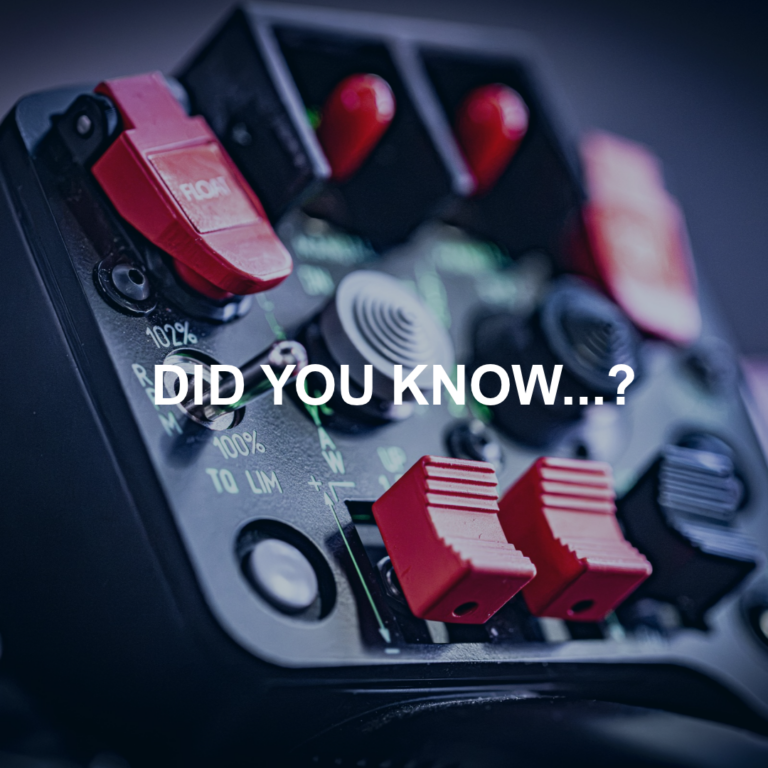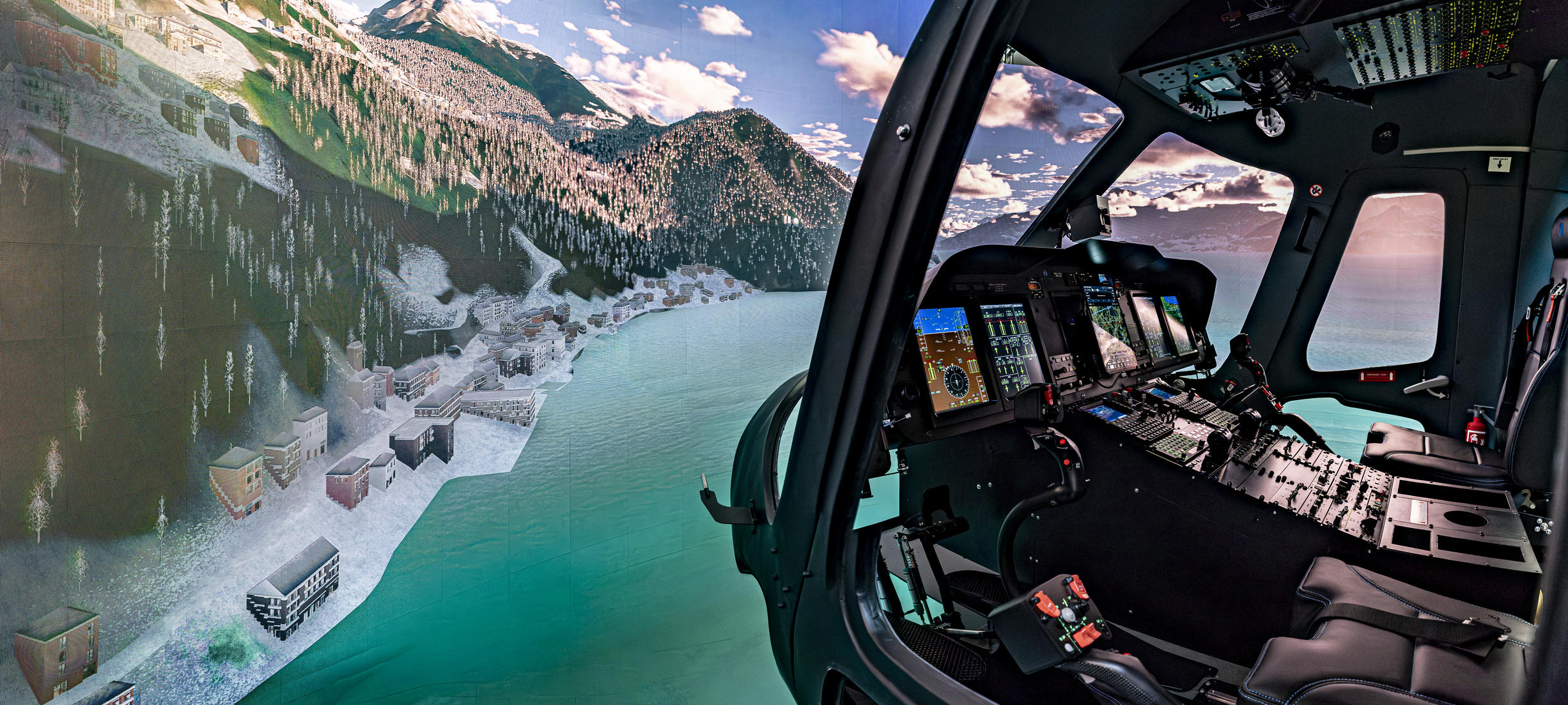
Multi-crew FFS systems give two-pilot crews the most complete environment to train emergencies together: a type-specific cockpit, a motion system and a visual system in one device. FNPT II MCC devices train the same crew procedures and Crew Resource Management (CRM) skills in a multi-pilot cockpit without motion. Which one an operator needs, and for which part of its program, depends on the training objective, the applicable regulatory framework and the access the operator has to each device.
This article compares both device types for emergency procedure simulation and MCC simulator training in helicopters and airplanes, and outlines the factors operators weigh when they plan enterprise pilot training.
What multi-crew emergency training involves
Multi-crew emergency training prepares the Pilot Flying (PF) and the Pilot Monitoring (PM) to recognize an abnormal situation, divide the workload, run the right procedure and decide together under time pressure. Communication, cross-checking and situational awareness matter as much as the technical procedure.
Flight Simulation Training Devices (FSTDs) make this possible because the instructor can trigger a failure at the exact moment chosen, repeat it and debrief it. In an airplane, that may be an engine failure after takeoff or a cargo smoke warning. In a multi-engine helicopter, it may be an engine failure during a Category A takeoff from an elevated helideck or a ditching during offshore operations. None of these can be practiced in the aircraft without real risk.
Why emergencies are trained as a crew
In a multi-pilot aircraft, emergency procedures are built around shared roles: one pilot flies while the other reads the checklist and monitors. A multi-crew device lets both seats train together, with the callouts and cross-checks the procedures assume.
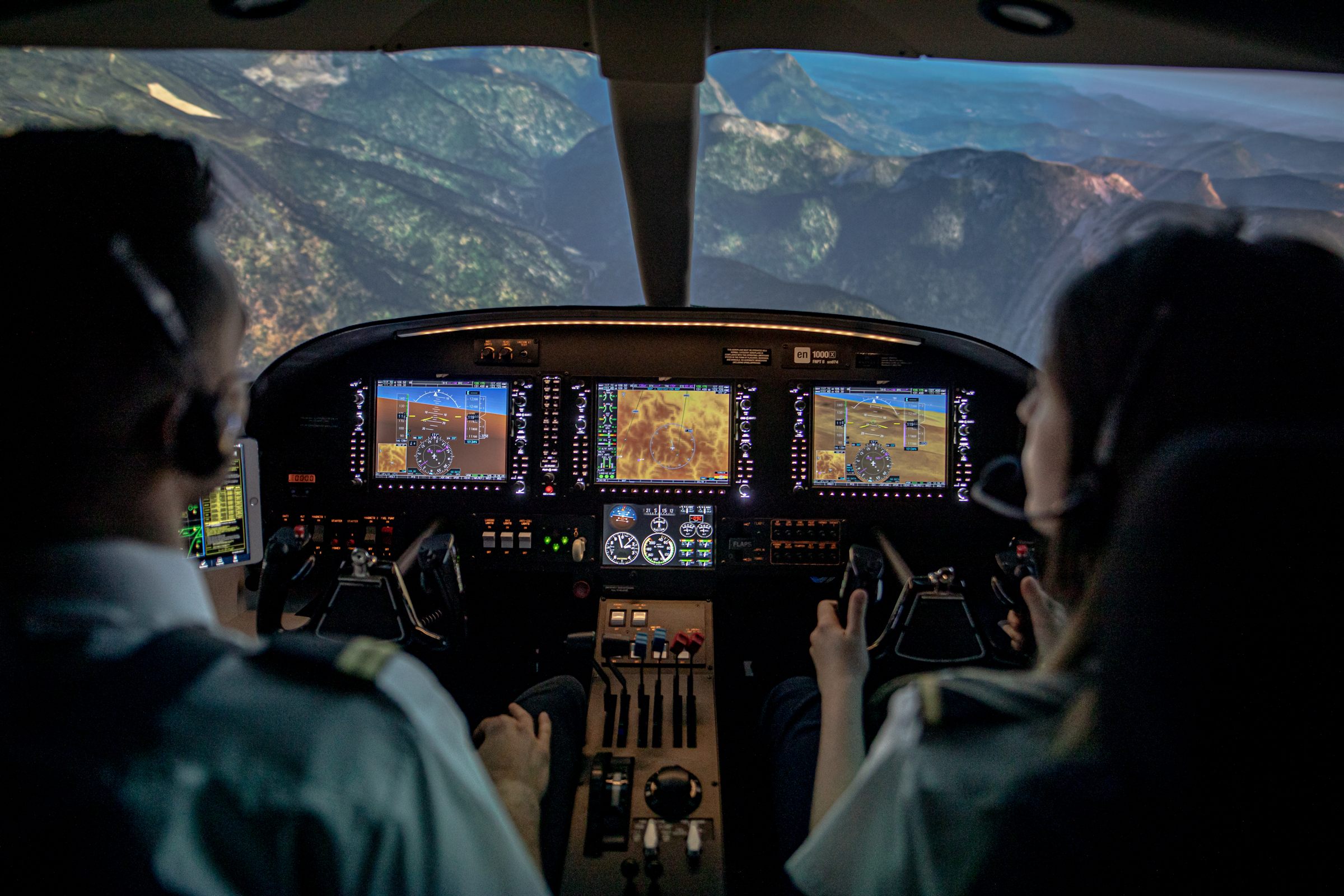
Multi-crew FFS systems vs FNPT II MCC devices
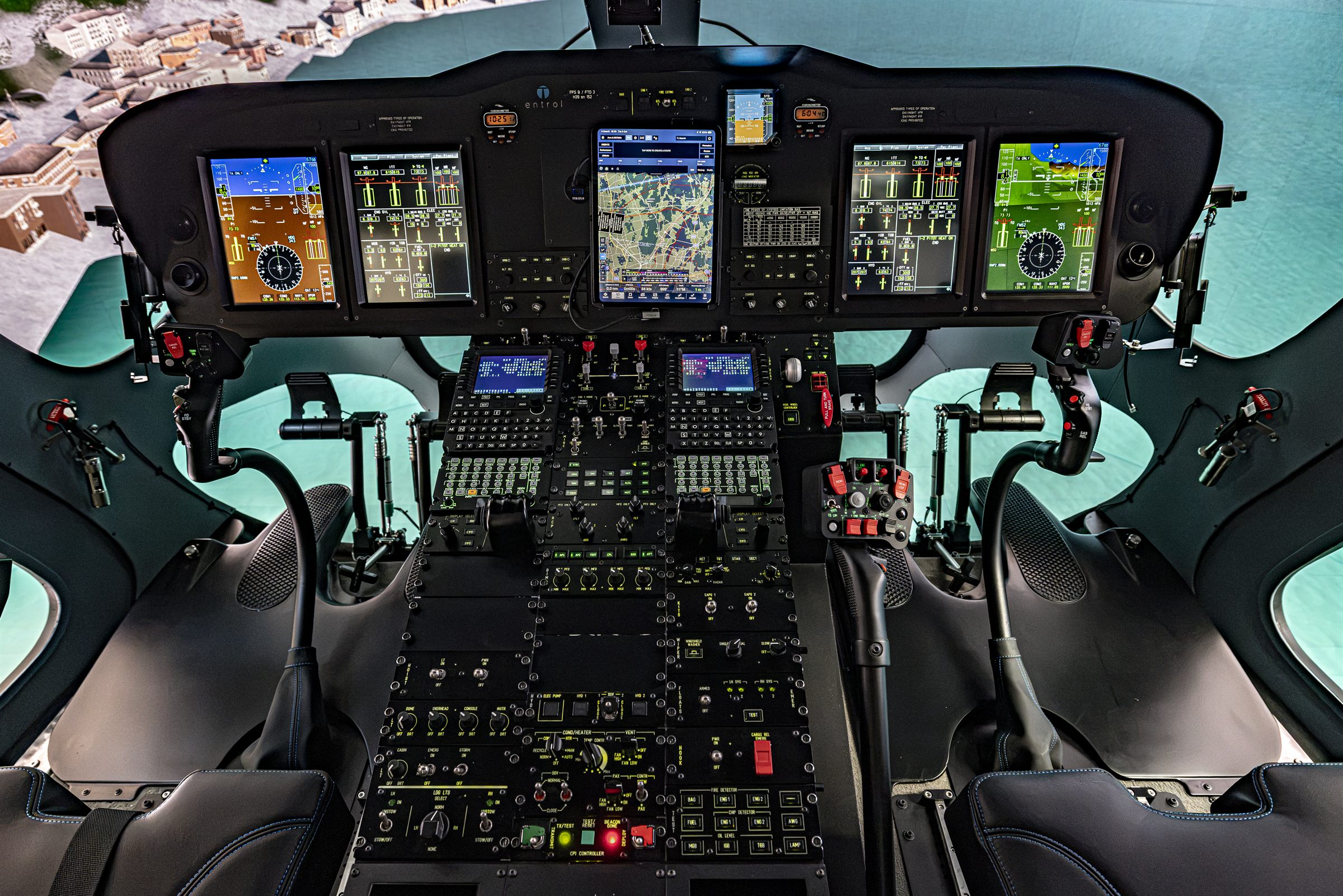
A Full Flight Simulator (FFS) replicates the cockpit of a specific aircraft type and combines it with a motion platform and an out-of-the-window visual system. Full flight simulators are used for type rating, recurrent training and checking, with credits that depend on each device’s qualification and on the authority.
An FNPT II MCC is a Flight and Navigation Procedures Trainer that meets additional requirements for multi-crew cooperation training. It reproduces a multi-pilot cockpit, which can be based on a specific aircraft, without a motion system, and is used for courses such as MCC, ATPL and instrument training, and for part of an operator’s own training.
| CRITERION | MULTI-CREW FFS | FNPT II MCC |
| Cockpit | Replica of a specific aircraft type | Multi-pilot cockpit, which can be based on a specific aircraft |
| Motion cues | Motion system included | No motion system |
| Typical uses | Type rating, recurrent training and checks, depending on the authority | MCC, ATPL and instrument courses; procedures and CRM training |
| Strength in emergency training | Handling of the emergency with motion cues and type-specific system behavior | Procedures, callouts, checklist discipline and crew decision-making |
| Installation | Large dedicated room and, in entrol’s standard, a reinforced concrete foundation | Smaller room, no motion foundation |
What a multi-crew FFS brings to emergency training
An FFS is the most complete device when the emergency depends on how the aircraft feels and responds. Motion cues help the crew recognize and manage events such as an engine failure in a critical phase of flight, and every switch, warning and system reaction is the one it will find in its own aircraft. For proficiency checks, the EASA framework refers first to an available and accessible FFS, and an FFS allows a check to be completed in a single session. In helicopters, it also covers emergencies closely tied to handling, such as Category A procedures, emergency flotation and ditching.
What an FNPT II MCC brings to emergency training
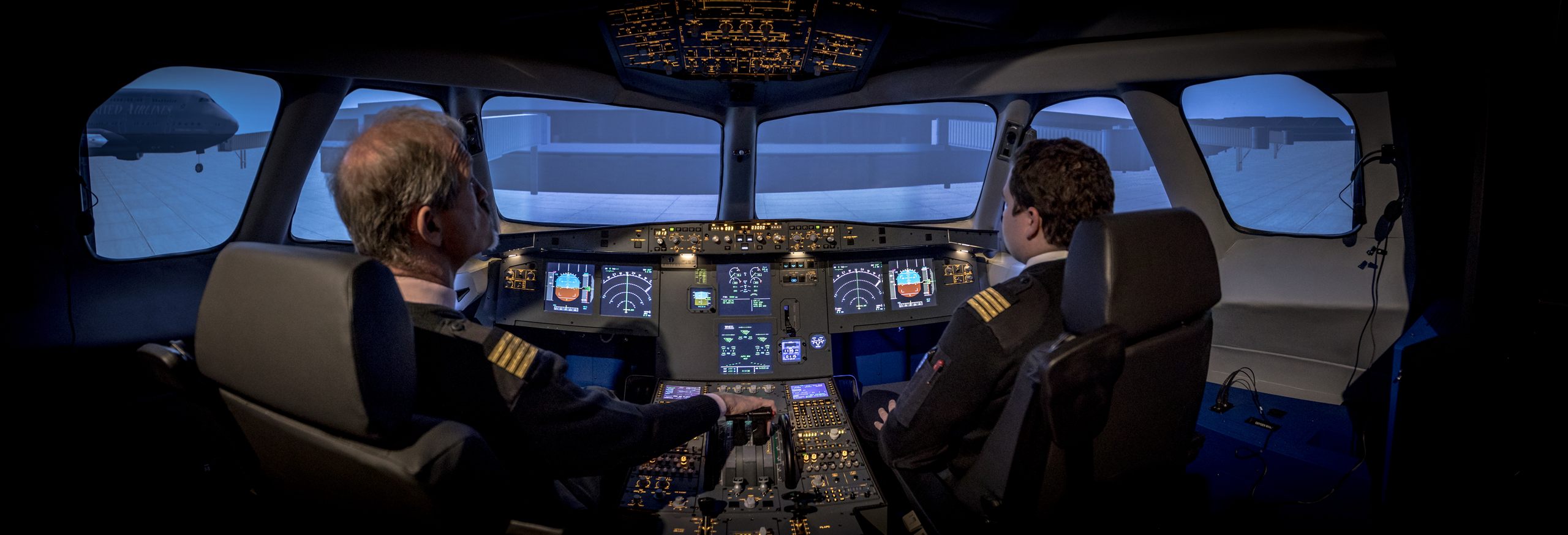
Many of the skills that decide the outcome of an emergency are procedural and non-technical: recognizing the failure, calling it out, choosing the right procedure and sharing tasks. An FNPT II MCC trains them in a two-pilot cockpit with the aircraft’s own logic. In an A320-based FNPT II MCC, for example, an activated failure brings up the corresponding ECAM action list, so the crew follows the same sequence it would on the line.
How enterprise operators decide: it depends
For airlines, helicopter operators and Approved Training Organizations (ATOs) with several bases, the challenge is delivering the same standard to many crews. There is no single answer, and the decision usually depends on five factors:
- The training objective. Initial MCC courses, type rating, recurrent training, checks and mission training have different fidelity needs.
- The regulatory framework. Under EASA Part-FCL, proficiency checks are conducted on an available and accessible FFS, or on a combination of FSTDs and the aircraft when an FFS is not available or accessible. Each authority interprets these requirements for its own operators.
- Access to each device. Booking slots, distance and the flexibility to reschedule affect how often crews can train.
- The operator’s own configuration. A device that replicates the operator’s cockpit, operating sites and procedures brings recurrent training closer to daily operations.
- The long-term business case. Number of pilots, logistics, maintenance and expected use over the device’s life.
Our article on choosing an FTD over an FFS for proficiency checks explains how authorities assess device combinations.
Standardizing across bases
Enterprise programs depend on consistency. The same device configuration and scenario library at every base means an emergency exercise is flown and assessed the same way wherever the crew trains, and a debriefing station helps keep assessment criteria aligned between instructors.
entrol solutions for multi-crew emergency training
At entrol, we build devices for both approaches. Our range of helicopter simulators goes from FNPT to FFS for multi-engine types such as the AW139, AW169 and AW109. Our AW139 simulator, for example, supports IR, ATPL and MCC training, mission training and additional training in systems, CRM and Line-Oriented Flight Training (LOFT). In its FFS configuration, it combines a six-degrees-of-freedom motion system with failures based on the aircraft’s emergency and malfunction procedures, with the final list defined with each customer.
For airplane crews, our A320 FNPT II MCC simulator is the A320 simulator we build for APS MCC courses, with a dual Multipurpose Control and Display Unit (MCDU), windshear warning and prediction, and an optional smoke machine for smoke scenarios. The en-4000x FNPT II MCC/AATD combines SEP, MEP and an A320-based JET configuration in one device. Our support and certification services cover the certification process, from a preliminary Master Qualification Test Guide (MQTG) to on-site assistance.
Matching the device to the training objective
Comparing multi-crew FFS systems with FNPT II MCC devices is not about choosing one over the other. The FFS offers the most complete replication of the aircraft, including motion, and the FNPT II MCC offers a focused environment for crew procedures and CRM. The right combination depends on what each operator needs to train, what its authority accepts and how its crews can access each device, and planning it with those factors in mind makes emergency training more consistent and, ultimately, safer.
Frequently asked questions
What is the difference between MCC and CRM training?
Multi-Crew Cooperation (MCC) training is a structured course that teaches pilots to operate as a crew in a multi-pilot aircraft. Crew Resource Management (CRM) is the broader set of non-technical skills, such as communication, decision-making and workload management, that pilots apply throughout their careers.
Can an FNPT II MCC replace a Full Flight Simulator for emergency training?
It depends on the training objective. An FNPT II MCC is well suited to emergency procedures, callouts and crew coordination, but it does not provide motion cues. The credits each device can receive depend on its qualification and on the applicable regulatory framework.
Do helicopter and airplane crews train emergencies the same way?
The crew principles are the same, but the scenarios differ. Helicopter crews also train Category A procedures, emergency flotation and ditching, while airplane crews train events such as an engine failure after takeoff or a cargo smoke warning.
Which emergencies can be trained in an A320 simulator for MCC?
It depends on the device’s failure library and the approved training program. On entrol’s A320 FNPT II MCC, the library includes engine, FADEC, electrical and bleed failures and avionics, lavatory and cargo smoke warnings, among others.